The fastest-moving air purifier listings in US and EU retail right now are not the generic "home" boxes — they are the ones with a pet story on the panel. The demand math explains why: APPA's 2025 National Pet Owners Survey counts about 95 million US households owning at least one pet, roughly seven in ten homes, and AAFA estimates that 10–20% of the world's population is allergic to cats or dogs. Pets everywhere, allergy sufferers in the same rooms. Here is the uncomfortable part, though: a large share of "pet" air purifiers are standard machines with new silk-print. This guide is about what actually separates a pet platform from packaging — and how to verify it before you wire a deposit.
Why pet-specific outsells generic in home air treatment
Three forces push the pet segment ahead of the generic category. First, the installed base is enormous and still growing — 71 million US households own a dog and 53 million own a cat, per APPA. Second, the two purchase triggers, allergy relief and odor control, are felt daily; nobody impulse-buys a purifier for abstract PM2.5, but a litter box that announces itself from the hallway starts a search session. Third, reviews reward specialization. Retail buyers already voted with SKU counts: Levoit and Winix both field dedicated pet models in US retail, because "pet" converts better than "medium room, 400 m³/h" ever will.
For a brand owner, the commercial point is margin structure. Generic white-box purifiers race to the bottom on price; a pet SKU with a documented allergen and odor story holds its price point and feeds a replacement-filter annuity on top. Cat allergies are twice as common as dog allergies, per AAFA, and the offending protein — Fel d 1 — is exactly the kind of fine, stubbornly airborne particle that justifies a serious filter stack. Which brings us to the engineering.
The channel math deserves one more sentence. Air purifiers are a two-revenue business: the machine sale, then a replacement filter every 6–12 months for the life of the unit. Pet households replace filters faster, because hair, dander and litter dust load media harder than ordinary household air. The consumable annuity in this niche is structurally stronger than in the generic category — win a pet customer once and you can bill them for years.
What a pet air purifier OEM must prove
Answer first: three things, each with a third-party report mapped to the exact model you are buying — allergen capture, odor removal, and pathogen control. If a supplier's answer to any of the three is "it has a HEPA filter", you are looking at packaging, not a platform.
Allergen capture, by name. The report should name the allergens: cat allergen (Fel d 1), dog allergen (Can f 1), dust-mite allergen. This matters because Fel d 1 is an awkward target — a 2018 clinical review notes that while much of it rides on larger particles, about 23% is carried on particles under 4.7 µm that stay suspended for days. Airborne for days means an air purifier can genuinely reach it — but only with high-efficiency media. That is why we build pet platforms on H13 HEPA (≥ 99.95% efficiency at the most penetrating particle size, per EN 1822) rather than "HEPA-type" paper; the difference between those two is where review-star ratings are won and lost. Our guide on specifying HEPA grades in an RFQ goes deeper.
Odor removal, by gas. Pet odor is chemistry, not vibes: ammonia from litter boxes and urine, hydrogen sulfide, trimethylamine, acetic acid, plus the broader TVOC background. Standard activated carbon adsorbs generic VOCs reasonably well; pet odor needs a carbon blend tuned and validated against those specific gases. When a supplier says "carbon filter included", ask which gases, at what removal rate, tested by whom.
Pathogen control, including pet-relevant organisms. A credible suite goes beyond the usual H1N1 and S. aureus to organisms a pet household actually harbors — feline calicivirus and M. canis (a ringworm fungus) are the ones that make a veterinarian nod. These reports exist; serious factories commission them.
The shorthand version, for your next supplier call:
| Generic box with pet artwork | Real pet platform | |
|---|---|---|
| Filter stack | Whatever HEPA-grade paper was cheapest at quote time | H13 HEPA plus a carbon blend tuned for pet odor gases |
| Allergen claims | "Removes 99.97% of particles" — no allergen ever named | Third-party reports for cat, dog and dust-mite allergens, per model |
| Odor claims | "Activated carbon included" | Removal validated against ammonia, hydrogen sulfide, trimethylamine, acetic acid |
| Pathogen suite | Generic bacteria in the marketing copy | Lab reports that include feline calicivirus and M. canis |
| Consumables | Outsourced filter, rebid every quarter | Filter division under the same roof — matched seal and pressure drop |
The report suite that separates platforms from packaging
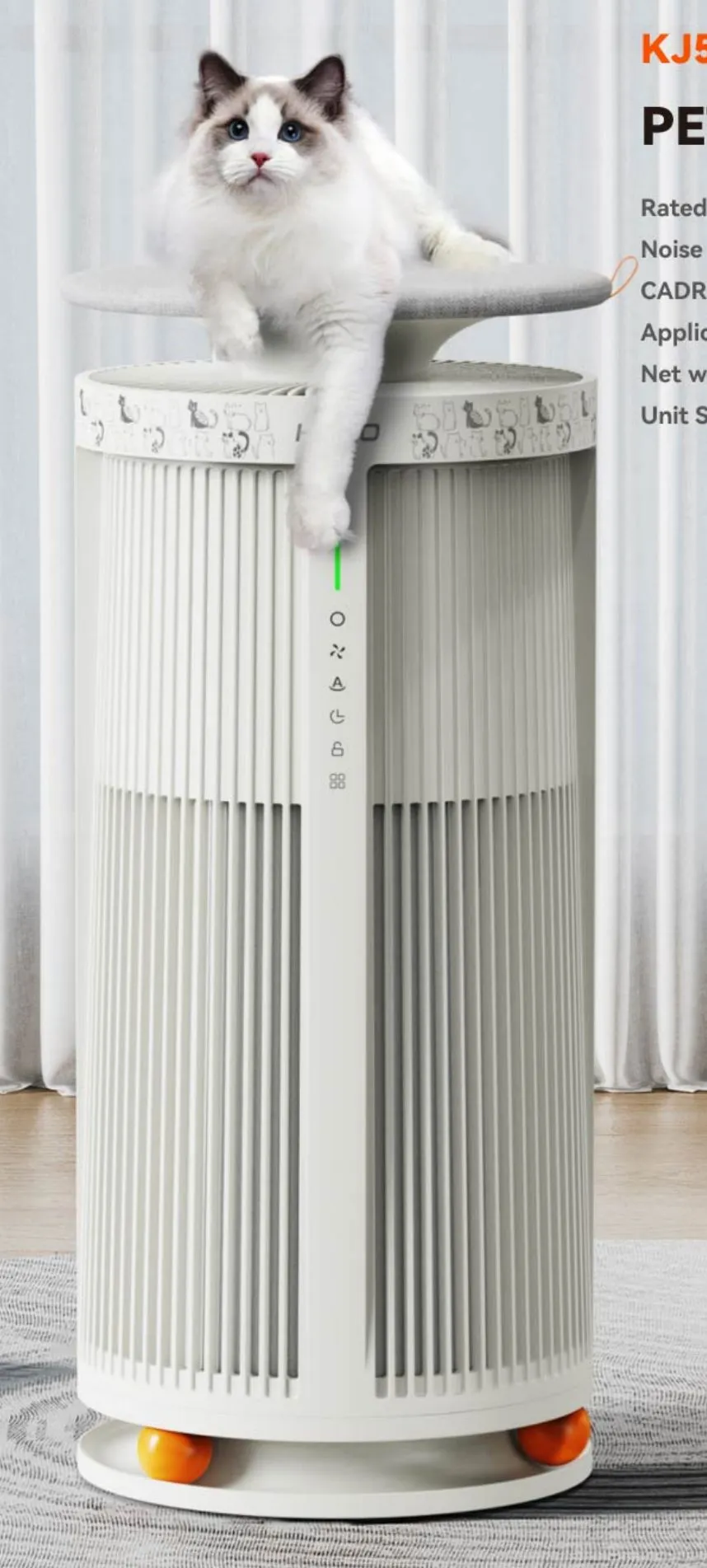
Here is the standard we hold our own pet line to, and what you should demand from any pet air purifier OEM. Our KJ500G-B07 platform carries a third-party report set covering 3 allergen classes (cat, dog, dust mite), 9 pathogens (H1N1, S. aureus, E. coli, C. albicans, A. niger, Salmonella, K. pneumoniae, feline calicivirus, M. canis), 5 odor gases (ammonia, hydrogen sulfide, trimethylamine, acetic acid, TVOC) and PM1.0/PM10 removal. Full copies go to qualified buyers under NDA — "report set on file" is our deliberate phrasing, because the documents belong to the testing labs' formats and your due diligence should include reading the originals.
Two reading tips when you get a supplier's reports. Check that the tested model is the model quoted to you, not a sibling with a similar name. And check the lab: CMA/CNAS-accredited or an equivalent accredited body in your market. A PDF with a logo but no accreditation number is a brochure. Third, ask when the reports were commissioned: a suite run at platform launch and repeated when filter media changes tells you the factory treats validation as maintenance, not a one-time marketing event. Our test report center indexes what we hold, by model, so you can map documents to SKUs before the first call.
Reference point: the KJ500G pet series
Concrete numbers make this less abstract. The series runs two production platforms: the KJ500G-A01 at 500 m³/h particle CADR (54 W, ≤ 66 dB(A), 6.5 kg, Ø300 × 652 mm) and the KJ500G-B07 at 520 m³/h, both rated for rooms of 36–60 m² with an H13 HEPA + pet-odor optimized carbon stack. For brands that need an entry price point, the KJ160G-A01 desktop unit covers 10–18 m² at 150 m³/h in a 1.8 kg, Ø200 × 380 mm footprint — the basket-builder SKU for marketplaces.
Certifications, as always on this site, are held per model: the KJ500G series is documented today with CE (LVD / EMC / RoHS) and US EPA establishment registration (Est. No. 98681-CHN-1), serving the EU, US, Japan and Southeast Asia. If your roadmap includes California-first retail, ask us directly what additional testing your exact configuration needs — an honest answer about what is not covered is worth more than a logo wall. Full specs and the document list live on the KJ500G pet series page.
A note on portfolio shape, because the brands getting this niche right rarely launch one SKU. The 500 m³/h platform anchors the range as the hero listing; the desktop unit catches the price-sensitive shopper and the "second purifier for the bedroom" upgrade; both carry the same pet positioning, so review equity compounds across the range instead of starting from zero per listing. Two platforms, one story, one filter program.
Why the filter factory matters more than the assembly line
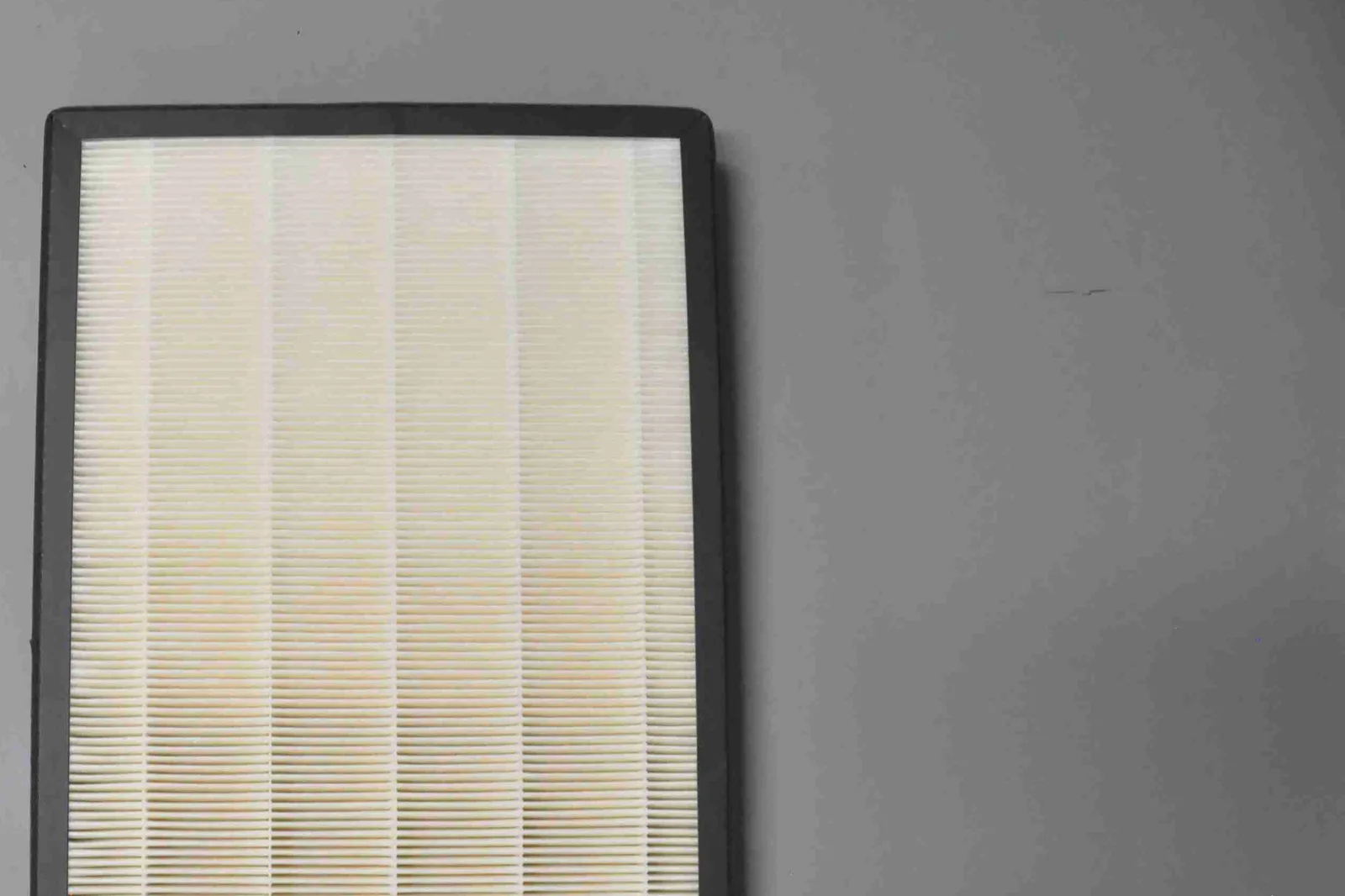
The machine is the razor; the filter is the blade — and in the pet niche the blade dulls fast, because hair, dander and litter dust load a filter harder than ordinary household air. Your repeat revenue lives in that consumable. So ask who manufactures the filter. We run our own filter division — an RMB 20 million operation producing 2 million sets a year — precisely because a pet platform's carbon blend is not something to outsource to the lowest bidder. Factory-direct filters also mean your replacement SKUs are engineered by the same team that designed the machine: fit, seal and pressure drop matched, not approximated. The economics of structuring that program are on the filters and consumables page.
One spec-level detail worth writing into your RFQ: carbon weight and treatment. Grams of carbon per filter, granular versus impregnated media, and the target gas list should be fixed against the signed sample. Carbon is the first place a quiet cost-cut shows up between sample and mass production — the machine still smells of nothing in the showroom, and the one-star reviews arrive three months later.
Who this is NOT for
Honesty section, because a pet niche done wrong is expensive. Skip a dedicated pet platform if any of these describe you:
- You want a generic box with a paw sticker. Plenty of trading companies will sell you that. We won't, and this article is not really for you.
- You need 100–200 units to test the waters. Our MOQ is 500 for private label; below that, buy stock from a trader and accept the documentation that comes with it.
- You need shipment next month. Customized mass production runs 40–50 working days. A pet-positioned quote promising 20 days is selling you warehouse stock with a sticker — see the first point.
- You will never sell the replacement filter. If your model is one-and-done hardware sales, you are paying for engineering you won't monetize. The pet niche pays back through the consumable annuity.
The sourcing checklist: 6 questions for any pet air purifier OEM
- Show me the allergen report. It should name cat allergen, dog allergen and dust-mite allergen — for your exact SKU, from an accredited lab. "HEPA filter" is not an answer.
- Which odor gases are validated? You want ammonia, hydrogen sulfide, trimethylamine and acetic acid named with removal rates. Pet odor is those gases; everything else is generic VOC talk.
- Does the pathogen suite include pet-relevant organisms? Feline calicivirus and M. canis separate a pet platform from a bacteria-only marketing list.
- Which certifications are held per model for my markets? CE, EPA registration, and whatever your channel needs — mapped to SKUs, not projected on a slide.
- What does the replacement filter cost at volume? Get the consumables price list before the machine price. Over three years the filters often out-earn the hardware.
- What are the MOQ, lead time and sample terms — in writing? The honest baseline for customized production is 500 units and 40–50 working days; stock samples in 1–7 days, sample fee refundable against the order (ours is 1.3× production price, refunded). Full private-label terms are published.
Run us through all six. Send your target market and channel and we will reply with the per-model report list and compliance mapping for the KJ500G platform — start the conversation here. The pet niche rewards brands that can prove things; pick a factory that feels the same way.
References
- American Pet Products Association — National Pet Owners Survey & industry statistics
- Asthma and Allergy Foundation of America — pet (dog and cat) allergies
- Chan & Leung (2018) — dog and cat allergies: current state of diagnostic approaches (Fel d 1 airborne particle data)
- US EPA — guide to air cleaners in the home